From T-cell engagers to in vivo cell therapy and vaccination: The next generation of cancer treatment
- Scientific news
- Science
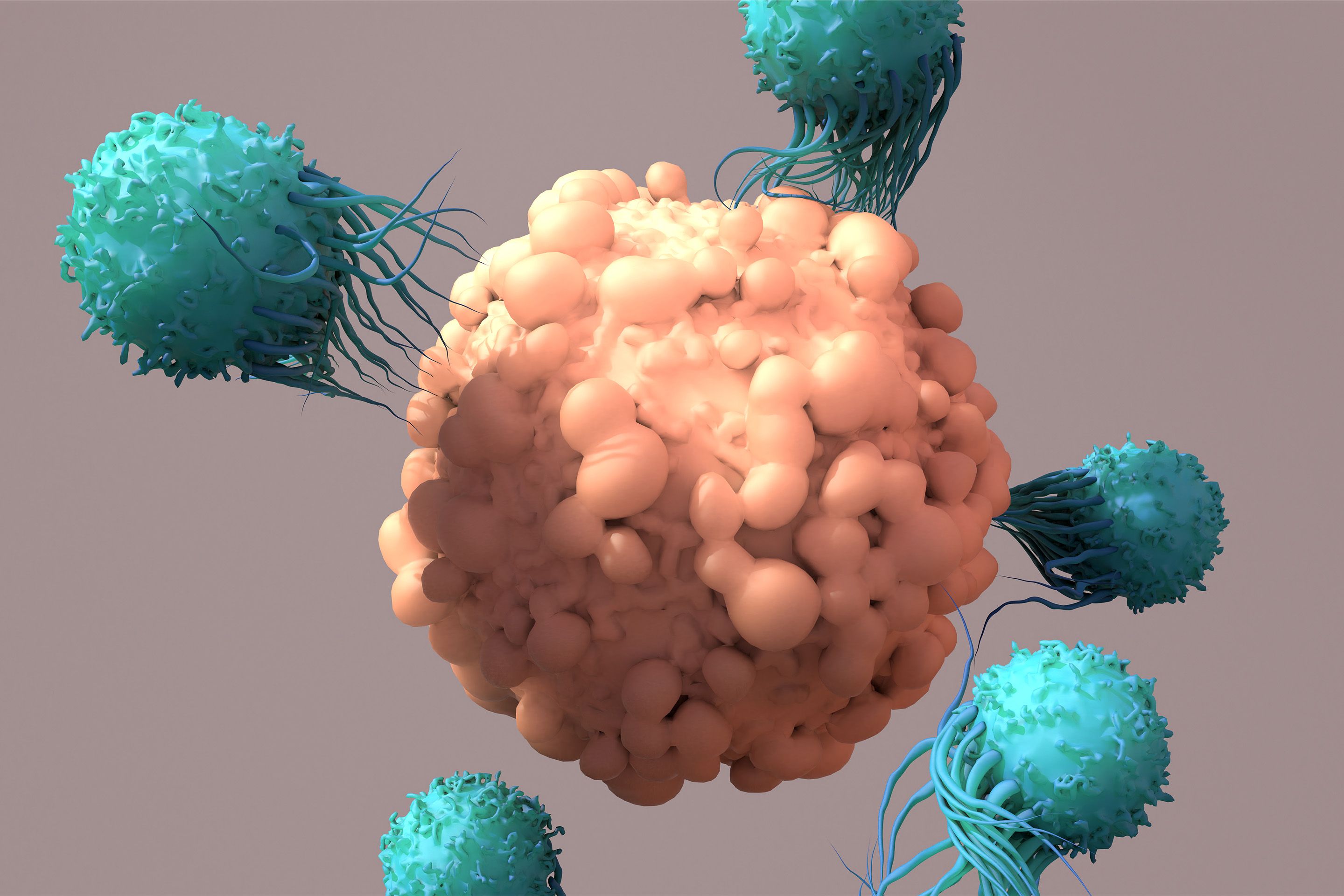
Cancer remains the second leading cause of death in Austria, as well as worldwide. Innovative immunotherapies such as checkpoint inhibitors, CAR-T cell therapy and T-cell engagers, as well as novel antibody-drug conjugates, are already significantly increasing life expectancy for many types of cancer. Recent research findings on in vivo cell therapy have attracted particular attention of late. This topic, along with how a deeper understanding of molecular biology can lead to even better treatment of cancer as a systemic disease, will be the focus of the Annual Meeting of the German, Austrian and Swiss Society for Haematology and Medical Oncology, taking place from 9 to 12 October at the Austria Center Vienna.
“In times of increasingly scarce resources, it is a key priority to help people gain a better understanding of advances in cancer medicine. Only in this way can the necessary investment in research and scientific funding be secured, ultimately enabling the further development of new, innovative therapies – such as the various immunotherapies and other molecularly targeted therapies – in cancer treatment. Cancer is now increasingly understood as a systemic disease. Innovative cancer treatments based on this insight are making increasingly personalised and targeted treatment possible. This significantly improves the chances of survival for those affected and, for the first time, offers hope even for types of cancer that were previously almost untreatable, such as aggressive pancreatic cancer,” emphasizes Prof. Dominik Wolf, Director of the University Clinic for Internal Medicine V (Haematology and Oncology) at the Medical University of Innsbruck and one of the two conference presidents of the Annual Meeting of the German, Austrian and Swiss Society for Haematology and Medical Oncology. As a result, the average 5-year survival rate for cancer in general is already around 65 per cent.
Cancer as a systemic disease: still the second leading cause of death
Nevertheless, around 42,000 people in Austria are diagnosed with cancer every year. The WHO even estimates that the number of cancer diagnoses worldwide could almost double by 2050. In order to detect and treat cancer more effectively, it is important to increasingly recognize cancer as a systemic disease. “The body shows systemic signs of the disease very early on – at the onset of cancer – for example through the tumor’s interaction with the immune and nervous systems. The immune system and the gut microbiome also play a major role in fighting cancer. We already have a good understanding of the immune system’s response to cancer – knowledge that we are already utilising in various ways in the fight against cancer. However, a deeper understanding of the molecular diversity of cancer and the immunology of the disease – including the microbiome – will play a central role in predicting the benefit of a therapy and in developing the next generation of treatment options, particularly when comparing patients who are primarily resistant with those who are ‘super-responders’,” emphasizes Wolf.
Immunotherapy with checkpoint inhibitors – fighting cancer with the immune system
“The classic approach in immunotherapy is treatment using checkpoint inhibitors. The underlying mechanism is that, in every healthy person, the immune system must switch off the immune response – for example, in the context of an infection – to prevent autoimmunity from occurring. The tumor now exploits these immune system deactivation mechanisms to protect itself against attacks by immune cells. Immunotherapy based on checkpoint inhibitors reactivates the immune system – which has been erroneously deactivated by the tumor. “This works particularly well for types of cancer – such as malignant melanoma or lung cancer – where toxic substances such as UV light and tobacco cause a multitude of DNA damage and numerous mutations, leading to the production of a large number of altered proteins,” emphasizes Wolf. Certain lymphomas, bladder cancer and triple-negative breast cancer also respond well to immunotherapy with checkpoint inhibitors.
One-off CAR-T cell therapy versus readily available, long-term T-cell engager therapy
Whilst immunotherapy with checkpoint inhibitors releases the ‘brakes’ so that the body’s own immune response can become active again, CAR-T cell therapy takes a different approach. The patient’s own T-cells are extracted, genetically modified in the laboratory and then reintroduced into the body so that they can bind directly to the tumor cells and destroy them. It is currently being used successfully, particularly in blood cancers such as acute lymphoblastic leukemia (ALL), multiple myeloma and B-cell non-Hodgkin’s lymphomas (follicular lymphoma and DLBCL). “At the same time, immunotherapy using T-cell engagers is currently developing rapidly. These are specific antibodies that bind both to the tumor cell and, at the same time, to the T-cell, thereby forming a bridge between the two; as a result of this activation, the immune system destroys the cancer cell. A major advantage of T-cell engagers is that treatment can be started more quickly, as no genetic modification of cells in the laboratory is required,” emphasizes Wolf. Whilst CAR-T cell therapy is a one-off treatment, T-cell engager therapy is, however, a long-term treatment, as it does not result in any long-term memory function within the immune system. Most recently, the first T-cell engager in oncology was even approved for the treatment of highly aggressive small cell lung cancer (SCLC).
The future? In vivo cell therapy as an innovative advancement of existing CAR-T cell therapy
One of the most exciting developments in CAR-T cell therapy at present is in vivo CAR-T cell therapy. “With in vivo CAR-T cell therapy, the labour-intensive process of producing CAR-T cells outside the body is eliminated. The patient receives an infusion containing, for example, nanoparticles that transport viral vectors specifically into T cells; once the genetic information for a CAR has been introduced, it can be read directly there. The T-cells are thus reprogrammed within the body itself into CAR-T cells, which can subsequently recognize and destroy cancer cells,” explains Wolf. Initial promising research results have been reported for multiple myeloma. Wolf is confident that the first approvals in this area will be granted within the next five years.
Granulocytes – a double-edged sword in the fight against cancer
Immunotherapy does not always work as one might hope. “This is partly because it is not always just the cancer cells themselves, but also otherwise healthy immune cells within the tumor that are reprogrammed into suppressive elements and can thus be the cause of resistance.” The complex interplay between cancer cells and otherwise healthy cells (immune, connective tissue and vascular cells) leads to specific microenvironments, which are now referred to as ‘cancer ecotypes’ – in other words, small ecosystems,” explains Wolf. Granulocytes, for example, play a central role in these patterns. They are the largest subgroup of white blood cells, produced in the bone marrow and migrating from the blood into the tissues. The most important for fighting cancer are neutrophils, which engulf and destroy pathogens and cellular debris, as well as regulating inflammatory responses and activating other immune cells. However, these granulocytes can take on various roles within the tumour; for example, they can fight the cancer but also promote tumour growth. “As certain granulocytes often promote cancer growth, work is underway to develop methods to block them,” explains Wolf. However, healthy fibroblasts – which are connective tissue cells – or healthy endothelial cells, which line the inside of blood and lymph vessels, can also serve as a source of nourishment for cancer cells. Further research is needed here to determine how, in future, we can prevent cancer cells from exploiting these healthy body cells for their own benefit, thereby promoting their growth and metastasis.
Vaccinations against cancer-causing infectious diseases
Vaccination is also a strategy for combating cancer – both as a preventative and a therapeutic measure. “To enable the body’s immune system to retain a long-term therapeutic memory following immunotherapy in the future, work is therefore underway on promising therapeutic mRNA vaccines that are tailored to the specific cancer that was present,” emphasizes Wolf. Prophylactic vaccinations against hepatitis B and HPV are already well established. “This is because, in addition to the direct transformative effect of viruses, a chronic inflammatory response in the body can also be a cause of cancer development. We know, for example, that chronic inflammation resulting from a hepatitis B infection can lead to liver inflammation and, subsequently, to cirrhosis and liver cancer,” explains Wolf.
About IAKW-AG, DGHO, OeGHO, SGMO and SGH
IAKW-AG (Internationales Amtssitz- und Konferenzzentrum Wien, Aktiengesellschaft) is responsible for the maintenance of the Vienna International Centre (VIC) and the operation of the Austria Center Vienna. With 21 halls, 134 meeting rooms and around 26,000 m² of exhibition space, the Austria Center Vienna is Austria’s largest conference centre and ranks among the leading players in the international conference industry. The annual conference of the German Society for Haematology and Medical Oncology (DGHO), the Austrian Society for Haematology and Medical Oncology (OeGHO), the Swiss Society for Medical Oncology (SGMO) and the Swiss Society for Haematology (SGH) is the largest congress on blood and cancer diseases in the German-speaking world.
Contact

You might also be interested in
From fatal to treatable: new immunotherapies and mRNA vaccines are revolutionizing melanoma treatment
Thanks to innovative immunotherapy, the survival...

Well-intentioned, but dangerous in wrong doses: dietary supplements as a potential health risk during cancer treatment
Over the course of a lifetime,...

Heart attack: Why every minute counts and how prevention and aftercare can save lives
Every 15 minutes, someone in Austria...